Where in the World Is Yoomie?

Location: Back in Siem Reap, Camboodia working for Senhoa.

Thursday, January 7, 2010

A Month in Laos

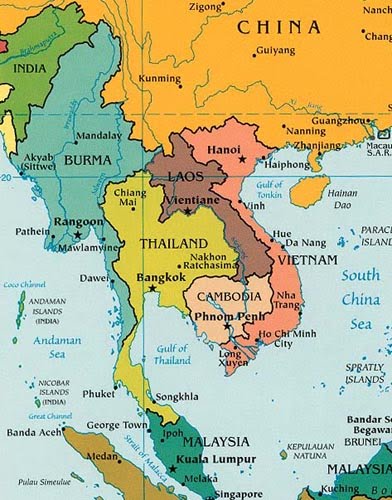
By January, after a drama-filled two months, I hopped the Thai-Laos border for some much needed relaxation. Visited to Luang Prabang, Vang Viene, Pakse and Si Phan Don (4,000 Islands). But before I could turn off my cell phone and bid the internet farewell, I spent four consecutive days in Chiang Rai hammering out graduate school essays and applications. Never again will I apply for university while traveling aboard in developing countries with slow-no internet and no scanner.  For this, I owe the dedication of my master thesis to my best friend. Laos was beautiful: caving, kayaking, trekking to waterfalls, bungalow dwelling, beer Lao drinking, hammock swinging, biking, and watching sunsets and sunrises type of vacation. More Americans should visit Laos. We should join the Europeans in their idea for four-week paid vacations instead of the average two-weeks.


While I was in Laos, VOICE was allowed back into Cambodia under the condition that they spilt their refugee work (which the Cambodia and Vietnamese governments frown upon) and sex trafficking work into two separate organizations. VOICE came back as Senhoa Foundation. However, as of recent,  Senhoa is still waiting on the Ministries to approve their registration. In the meantime, programs are put on hold and funding is drying up. The board of trustees made a deadline of May 31st; after, they will pull  out of Cambodia.


Don Det, 4000 Islands, Laos


Luang Prabang, Laos


Don Det, 4000 Islands, Laos


Saturday, December 12, 2009

A Stationary December Working With the Children's Organization of Southeast Asia (COSA) in Thailand

December was much more stationary. I spent four weeks at the Children’s Organization of Southeast Asia (COSA) Baan Yuu Suk Shelter in Mae Sai, Thailand (outside of Chiang Mai) for sexually abused hill tribe girls giving lessons in life skills and yoga, and teaching beginning English to the community children on weekends. I also shared the celebration of my favorite American holiday: Christmas. In exchange, I was taught organic farming, compost building, and how to cook in an outdoor kitchen. 


While I was at COSA, one of the youngest girls, age 3, was reclaimed by her aunt. In Thailand, the law states that if a blood relative reclaims the child, no matter how long the child has been living with another party/shelter or if the relative was the one to sell or abandon the child in the first place, sole custody must be given to the relative. Knowing that such progress can be taken away so easily, highlighted my already clear knowledge why such grassroots work was so damn frustrating. Also in this month, I got to spend time with a surprising large group of CouchSurfers who have made Chiang Mai their temporary home and made a couple of necessary visa runs to Thai-Burmese border. There was also some clashing of personalities at COSA which, in the end, created a new partnership out of the ashes.

Sunday, November 29, 2009

Sunday, November 22, 2009

SSF Child Abuse Prevention Week Long Training 11/11-11/22/2009

The 2009 Participants With Their Trainers


November saw my return back to the motherland of Vietnam after 24 years since I immigrated in 1985, the union with my mother’s side of the family, the blacklisting of VOICE out of Cambodia with 24 hours notice, a 2.5 weeklong training on the Convention of the Rights of the Child (CRC) at the Sary Sao Foundation (SSF) shelter for abandon children in Kampong Speu, Cambodia, the looming cancellation of SSF’s Children Protection program due to lack of funding, and a meeting with the Executive Director and Country Director of VOICE to discuss strategy in Phnom Penh. I also discovered that there is a remarkable, talented, and very passionate group of young expats (mid-late 20’s) working in all different areas of development in Siem Reap.


The Training and Activities


Saturday, November 21, 2009

Thursday, November 19, 2009

Know If Any Emergency Grants or Loans for International Non-profits?

The organization that I am currently doing short-term development work here in Cambodia needs urgent help in finding an emergency loan (US$5000) to cover the next three months of overhead operational costs to keep their shelter and Child Protection Program in operation in Kampong Speu province so they can buy time to find long-term funding. If you know of any organizations or foundations that give such emergency loans (i.e. one-time grants that have short/no waiting periods and/or not attached to any partnership agreements) for small amounts, please email them at: ssfcambodia@gmail.com or reply to this email. A letter from the founder/director, a local Cambodian man, can be found below. Additionally, their website is: http://ssfcambodia.org/


Thank you.
------------------------------------------------------------------------------------------------------


#181, Group 5, Peanicha Kam village, Rokha Thom commune, 
Chbar Morn district, Kampong Speu province, Kingdom of Cambodia
Mobile: (855) 12 471 106

Greetings from Sao Sary Foundation:

We hope that this inquiry finds you well. Unfortunately, the same cannot be said for our foundation. Sao Sary Foundation is facing an immediate crisis – due to lack of timely funding we may have to terminate our Child Protection Program which currently assists 50 children in care ranging from room and board, medical care, education, and vocational skills training. Our program affords them the opportunity to be children and not have to worry about the burdens of finding work to support their families. Such desperation makes them vulnerable to being trafficked.

SSF aims to alleviate child poverty in Cambodia’s poorest communities, while preventing all forms of violence, exploitation and abuse against children, especially commercial sexual exploitation, trafficking, child labor and child marriage. We do this through a proactive approach in protecting children from any form of violence, exploitation and abuse. Rather than waiting until it’s too late, SSF strives to identify at risk children and provide sustainable assistance to both the children and their families. It is our mission to achieve lasting improvements for children living in poverty in Cambodia's poorest communities, through a process that unites people across cultures and adds meaning and value to their lives.

Sao Sary Foundation is immediately seeking funds of US$5,000 by December 1, 2009 to continue operations for our Child Protection Program for a period of three months while we continue efforts to acquire long-term funding. Any immediate assistance that can be provided to the Sao Sary Foundation would be greatly appreciated than could be described. If you or anyone you know are aware of any emergency grants (i.e. one-time grants that have short/no waiting periods and/or not attached to any partnership agreements), please email us at: ssfcambodia@gmail.com. Additionally, personal donations can be made at: http://ssfcambodia.org/index.php?page=donate.

Thank you for your time and consideration of the plight of these children.


With warmest regard,

Sao Sary Foundation

SSF Celebrates November 19 World Day for Prevention of Child Abuse With Training


World Day for Prevention of Child Abuse – 19 November, “Child Participation in Preventing Abuse and Violence against Children”
Abuse against women and girls is on the rise in Cambodia, according to a government report released in November of 2008. Nearly one fourth of all females in Cambodia have suffered from domestic violence. Moreover, young girls have increasingly become targets of sexual assault, according to the most recent Cambodian Gender Assessment Survey, also released in 2008. The report, released by the Ministry of Women's Affairs, said the growing use of drugs and alcohol by men was leading to malicious behavior against female Cambodians. The report also said that more than half of all women felt domestic violence was justified in some cases in what it called “a mentality of passive acceptance” that has prevented efforts to end the problem. As a result, SSF believes that increased education and stop hunger are the most important factors in changing the attitudes that allow attacks on women and children to go unreported.
Although in the last decade, great progress has been made around the world to inform people about the realities of child abuse, last year SSF was one of only five organizations in all of Cambodia took the opportunity to recognize the worldwide Child Abuse Prevention day on November 19th. While the other groups focused primarily on writing to politicians, SSF has approached it on a community level, where understanding of what constitutes as child abuse is at a minimum. Although nearly everyone recognizes that violence against children is wrong, many parents and children do not understand the emotional harm inflicted on children through other forms of abuse that are not as easily recognized.
In a pretest conducted before the all day educational session, SSF concluded that 95 per cent of the participating children did not know or understand the meaning of words and terms, “child, child rights, child responsibilities, domestic violence, and abuse”, whilst the other 5 per cent were unsure of their meanings. When asked about domestic violence, most participants could only give us answers relating to physical violence or abuse such as hitting and beating etc. Their concept of different forms of abuse such as emotional harassment and child neglect was minimal. Throughout the day, the 45 participating children met in small groups in an attempt to define and better understand important concepts and criteria of child abuse. At the same time, equal focus was placed on informing the children of their rights and responsibilities as children in a family.


SSF believes that every child has the right to live without fear of their parents or guardians, and that every child has the right to earn an education. These are both ideas that are not currently prevalent in Cambodia, especially in rural areas that suffer from a general lack of education. Violence can have severe implications for children’s development. In the most severe cases, it can lead to death or injury, however it can also affect children’s health, their ability to learn, and even their willingness to go to school at all.


Violence destroys children’s self-confidence and can undermine their ability to be good parents in the future, a major factor contributing to the perpetuation of domestic violence all over the world. By seeking to increase awareness about the realities of child abuse and domestic violence, SSF hopes that the 45 children and adults who participated this past year in Child Abuse Prevention day will serve as role models for the rest of the community, while SSF plans to expand upon last year’s success this coming November. In the words of Licado Spokesman, Vann Sophat, “What a child needs to do,” he says, “is go to school and gain knowledge to become a well-educated citizen for the country in the future.”’

Participated children were took the photo with 19 November logo provided.

Wednesday, November 18, 2009

Looking Ahead

VOICE is not giving up without a fight; they are very dedicated to their work in Cambodia. The team evacuated to Bangkok on November 10 and the executive director flew there shortly after from their headquarters in Orange County, CA. VOICE is a registered non-profit in the States, thus, they are seeking assistance from the US Embassy in Phnom Penh. I just spoke to the director and learned that the team obtained temporary visas in order to meet with the Embassy and local ministries in country. However, she wasn’t optimistic about VOICE being able to continue operations and stated that it was going to be “a long road ahead”.


For being a relatively new international organization founded in Australia in 2007 (refugee placements began in the Philippines in 2007, trafficking efforts in Cambodia began in 2008), VOICE is very active and dedicated. The work they do is superior in the achievements in that the amount they have managed to accomplish in such a short time. My disappointment wouldn’t be in the lost of a job position but in lost of the experience in working with such a dedicated organization and the lost of an opportunity to work with such a unique displaced Vietnamese population. The trafficking program in Cambodia is essentially their only program; the refugee placement program in the Philippines is near completion. Thus, if they cannot continue their work in Cambodia, they will no doubt continue their mission in assisting disadvantage Vietnamese population elsewhere rather be that Burma or Laos. But this would mean starting from the beginning. 


As for me, in the meantime, I am on track in terms of where I want to be and when. I came to Southeast Asia for four reasons: 1) to gain field experience with local grassroots organizations; 2) learn how international development is affecting local communities, and 3) broaden my Vietnamese vocabulary, and 4) get in touch with my roots. I was not schedule to start my potential position with VOICE in Siem Reap until Feb so their setback has not delayed my plans per se.


For the pass week, I have been at the Sao Sary Foundation shelter for abandon Cambodian children assisting them in their Child Abuse Prevention training week in light of the UN Child Rights Convention (CRC) international Child Abuse Prevention day on Nov 19. Being in Cambodia has taught me a lot about how tightly development and politics are intertwine. The director, a local Cambodian man, has been explaining to me the politics between the government and non-profits, local non-profits partnerships in Cambodia, and how corruption makes “making a difference” even for a local difficult at every turn citing personal examples. He highlights the fact that his father-in-law is good friends with someone high-up in the ruling party as reason for SSF’s ability to overcome past political difficulties.


I will be in Cambodia until the end of the month. After, I will cross the land border into Thailand and head to Chang Mai to assist COSA's new shelter, opened mid-October for sexually exploited, abused and at-risk Thai and Burmese girls (the shelter is 2 hours south of the Myanmar-Thailand border) through the month of Dec. After, I will head cross the Thailand-Laos land border crossing where I will take a mini “vacation” for two weeks in Laos. No development work while in Laos. I will cross Laos (via bus) to Hanoi, Vietnam where I have a 3 week commitment with the Peace Village at their Hope Centers in mid-Jan to beginning of Feb. TET (Lunar New Year) will be spent in Binh Duong, South Vietnam with my mother’s relatives  whom I’ve only met again 24 years after I immigrated to the States. I am the first in my immediate family to return to Vietnam since we fled the country after the war. By Mar, I will return to Saigon to look for temporary housing from March-July. Housing there is surprising affordable; $250-300 for a furnished apartment with a weekly maid and wireless.  I’m in the process of applying for an internship with the Little Rose Shelter in Saigon, a shelter started in conjunction with Harvard University for trafficked Vietnamese girls in South Vietnam. I guess you can call it my “backup” plan. Additionally, by then, I should know where I will be in the fall for graduate school.


Vietnam feels familiar in that old pair of shoes kind of way. It pinches your toes, and the color and style are louder than you remembered making you wonder how your taste has diverged so much. But they are familiar and molded to your soles and eventually it comes back to you, short and sporadic at first but then quick and flowing later, the memory, the comfort, and the love.         

Tuesday, November 17, 2009

Development and Politics Intertwine Tightly in Cambodia

Being in Cambodia has taught me a lot about how tightly development and politics intertwine. The other day, I met a local woman who cultivates cucumbers to sell in order to earn a living. Recently, within a course of a night, all of her cucumbers were stolen, thus, her earnings. She reported the incident to the police along with her suspicion the culprit’s identity. The accused admitted to the crime but then, in turn, filed a claim for defamation of character asking for US$400 in restitution. Although the accused admitted to the crime, they were never charged. Now the police are pursuing her to pay the restitution. She had come to SSF to ask for legal assistance.


Yesterday, I make a visit to the Kraing Rohong community, one of the communities that SSF has assisted. Here, SSF built a well and educated the villagers in substantial development through agriculture. This field experience is far more informative than anything I could of gain just sitting in an economic development course. 


Kraing Rohong Community 


Monday, November 16, 2009

Article from the Phnom Penh Post: Sex Work Lures Unemployed


Sex work lures unemployed

E-mailPrintPDF
091116_03
Photo by: Tracey Shelton
Girls wait for customers in front of a karaoke parlour in Phnom Penh. The UNIAP has expressed concern that laid-off garment workers will be drawn into sex work to help suport their families.


BETWEEN 15 and 20 percent of former garment workers who have lost their jobs as a result of the global economic crisis have joined the capital’s entertainment sector, sparking concerns that many have embraced sex work as a last-ditch means of supporting their families, a UN official said Sunday. Lim Tith, the national project coordinator for the United Nations Inter-Agency Project on Human Trafficking (UNIAP), said he had arrived at the figure by combining new data with the results of a July survey that found that “declining working conditions” were forcing an increasing number of Cambodian women into the sex trade.


According to statistics from the Ministry of Labour, more than 30,000 garment workers lost their jobs in the first three quarters of 2009, meaning that, if Lim Tith’s estimate is accurate, at least 4,500 women have entered the entertainment sector this year alone. The jobs of a further 30,000 garment workers have been suspended. Lim Tith said many of the women view the “entertainment sector” – which includes karaoke bars, massage parlours and brothels – as their only option. “I think that they don’t want to, but they have no choice but to work in those places because of pressure to support their families,” he said. The UNIAP survey found that the most commonly cited reason for entering the sex trade was “difficult family circumstances”, followed by relatively higher earnings and better conditions than those they encountered in factories.


More training needed: NGOs
Several NGOs said they hoped the new estimate would prompt the government to ramp up efforts to provide vocational training to former garment workers who had lost their jobs. "The government is aware of the problem. That’s one thing. The second thing is to act,” said Pung Chhiv Kek, founder of the rights group Licadho. “We would expect that when these poor garment workers lose their jobs because of the crisis, the government would have a proactive programme to train them and to help them find work.” Mey Sovannara, communications coordinator for the HIV/AIDS NGO Khana, echoed this point, saying: “The government has to focus on vocational training centres to provide training to the women for skills other than serving, like weaving, so they can run their own shop.”


Hor Malin, an undersecretary of state at the Ministry of Women’s Affairs, said the government had been trying to assist these women and would continue to do so. “We have never been careless with them when they don’t have work to do, even though we cannot help all of them,” she said. “We’ve tried very hard to train them in new skills in order to find a solution for them.” She added, though, that the ministry also hopes some of the former garment workers would leave the capital. “Of course, I cannot prevent them from working in the entertainment sector, but according to our ministry’s strategy, we want them to stop and go back to their homeland to do farming or feed the animals,” she said. “It’s better than working in a karaoke parlour or as a beer promoter.” This suggestion, however, was dismissed by Pung Chhiv Kek as unrealistic. “They can’t go back to their villages because they have to get money for their families,” she said.